
Which Magnesium Form is Most Absorbable?
A new 2025 study provides insights on which magnesium supplements offer the best absorption rates.
Key Findings
A recent study published in Nutrients journal tested how well different forms of magnesium are absorbed by the body. Researchers evaluated supplements, medications, and regular diets using an advanced laboratory model that simulates human digestion.
The results:
Only about half of the magnesium from regular diets is absorbed by the body (49-53%)
Supplements consistently showed better absorption rates than food sources
The chemical form of magnesium dramatically affects absorption
How the supplement is delivered (capsule, tablet, etc.) matters
Your diet influences how well supplements are absorbed
Best Forms of Magnesium
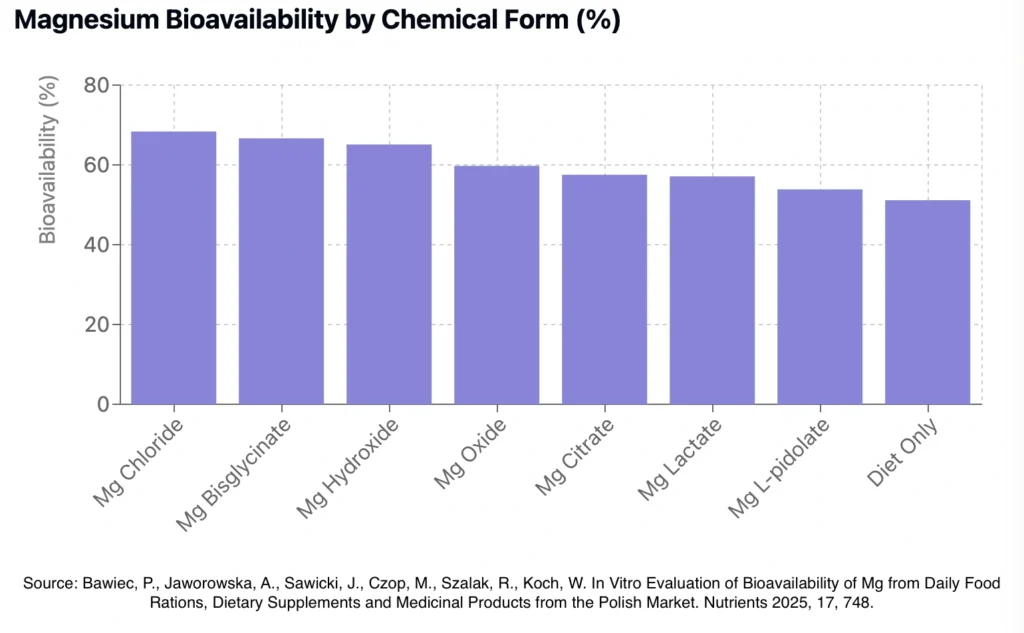
Not all magnesium supplements are created equal:
Magnesium bisglycinate (66.7% absorption) came in second
Magnesium oxide, despite being commonly used, showed moderate absorption (59.8%)
Interestingly, inorganic forms (like chloride and oxide) generally outperformed organic forms (like citrate and lactate) in this study—contradicting some popular assumptions.
Best Delivery Method
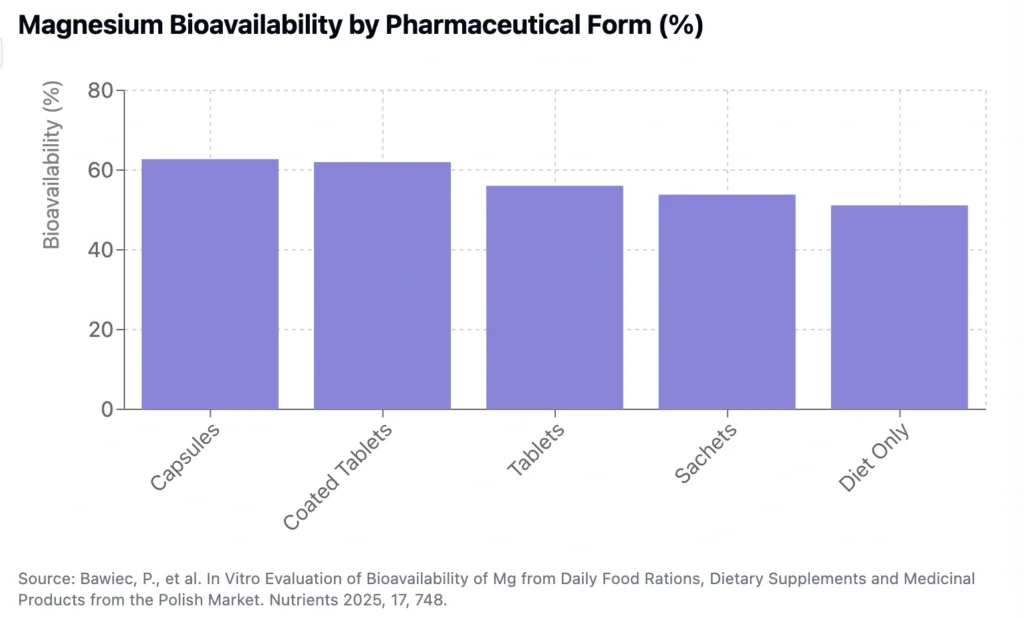
The form in which you take your supplement also affects absorption:
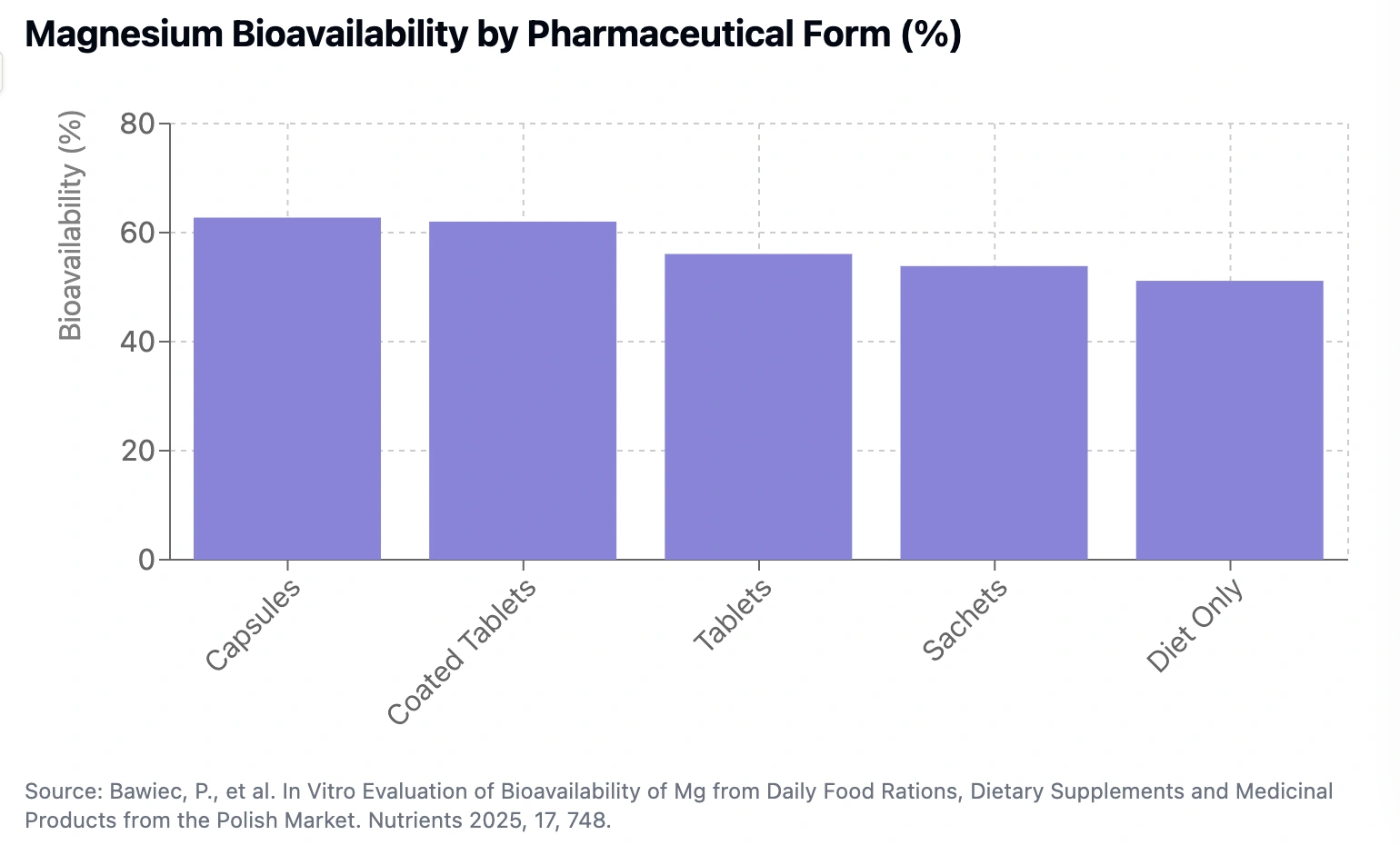
Capsules showed the highest bioavailability (62.8%)
Coated tablets performed nearly as well (62.0%)
Regular tablets showed moderate absorption (56.1%)
Powder sachets had the lowest absorption (53.9%)
Diet’s Impact on Absorption
The study also found that your diet influences how well magnesium is absorbed:
A higher protein, lower fiber diet improved absorption of some magnesium forms
High-fiber diets occasionally decreased absorption
Different magnesium compounds reacted differently to various diets
This is Lab Test
While this research provides valuable insights into magnesium bioavailability, it’s crucial to note this was an in vitro study conducted in a laboratory setting, not a clinical trial with human participants. The researchers used a sophisticated two-stage digestion model with cellulose dialysis tubes to simulate human digestion, but these controlled conditions can’t fully replicate the complex biological processes in the human body. Laboratory results don’t always translate perfectly to real-world scenarios, as individual factors like gut health, medication use, age, and various health conditions can significantly influence nutrient absorption. Before making definitive claims about which magnesium forms are superior, further human clinical trials with diverse populations are needed to verify these laboratory findings and determine if the absorption differences observed have meaningful impacts on health outcomes.
Source: Bawiec, P., Jaworowska, A., Sawicki, J., Czop, M., Szalak, R., Koch, W. (2025). In Vitro Evaluation of Bioavailability of Mg from Daily Food Rations, Dietary Supplements and Medicinal Products from the Polish Market. Nutrients, 17, 748.