
Magnesium Glycinate vs Bisglycinate (and Other Forms): What Is the Difference?
A pharmacy shelf can hold magnesium oxide, citrate, chloride, malate, L-threonate, glycinate and bisglycinate side by side.
Glycinate and bisglycinate are the same thing. The other forms differ in what the magnesium is joined to.
This article is part of our Magnesium guide.
Every form is magnesium plus a partner
Magnesium oxide is magnesium with oxygen, a simple mineral salt that does not dissolve well in water.
Magnesium citrate is magnesium with citric acid, the acid in citrus fruit.
Magnesium chloride is a mineral salt that dissolves easily in water.
Magnesium malate is magnesium with malic acid, an acid found in fruits such as apples.
Magnesium L-threonate, a newer form, is magnesium with L-threonic acid.
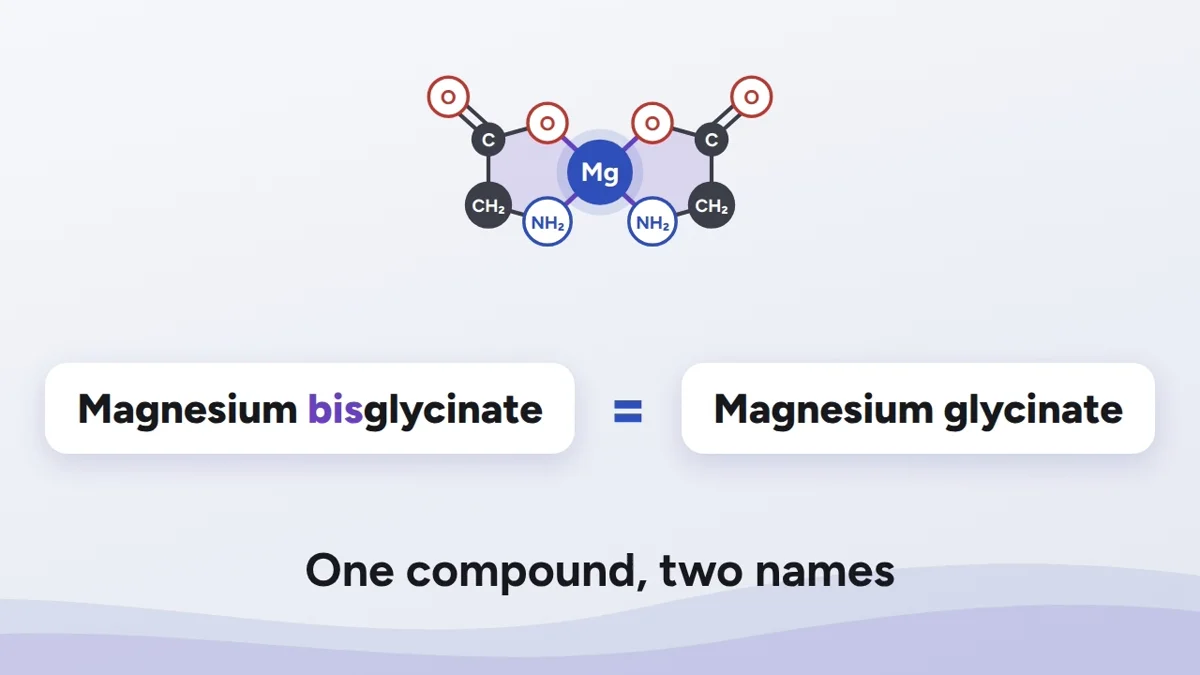
Magnesium bisglycinate is magnesium held by two molecules of glycine, the smallest amino acid.
Glycinate vs bisglycinate: one compound, two names
"Bis" means "two". One magnesium atom joins two glycine molecules, and each glycine holds the magnesium at two points.
That compound goes by both names: chemistry databases call it magnesium glycinate, while the European Union's list of supplement forms calls it magnesium bisglycinate.
Which form is best?
Citrate and chloride dissolve well in water, and small studies suggest forms like these are absorbed better than oxide. No form has been proven best in large human trials, so be careful with any website, including ours, that names one form as "the best".
How much magnesium do adults need?
From food and supplements together, women need about 310 to 320 mg of magnesium a day and men about 400 to 420 mg. Nuts, seeds, beans, whole grains and green leafy vegetables are good food sources.
For supplements, the upper limit used in Malaysia is 350 mg of magnesium a day for adults, not counting food. Too much often causes diarrhoea. If you have a kidney condition, are pregnant, or take regular medicine, ask your doctor or pharmacist first.
For food lists, amounts by age and how magnesium mixes with medicines, read the full Magnesium guide.
General information, not medical advice.